
Subaru Forester: Specifications / Recommended lubricants and capacities. Recommended SAE viscosity (thickness) number
Maintaining the long-term reliability and peak performance of your Kia Telluride depends heavily on using the exact lubricants and fluids specified by the manufacturer. Utilizing the correct high-quality fluids not only safeguards the intricate components of the engine and powertrain against premature wear but also optimizes fuel efficiency and overall driving dynamics. To ensure your vehicle operates exactly as engineered, strictly adhere to the following fluid specifications and capacities:
|
Lubricant |
Volume |
Classification |
|
|---|---|---|---|
|
Engine oil (drain and refill) 
|
Smartstream G2.5 T-GDi |
6.13 US qt. (5.8 L) |
Full synthetic SAE 0W-30, API SN PLUS/SP, or ILSAC GF-6 |
| Automatic transmission (AT) fluid 1 |
7.5 US qt. (7.1 L) |
SK ATF SP4M-1, MICHANG ATF SP4M-1, S-OIL ATF SP4M-1, Kia Genuine ATF SP4M-1 |
|
| Coolant 2 |
Smartstream G2.5 T-GDi |
12.16 US qt. (11.51 L) |
Phosphate based ethylene glycol based coolant |
|
Brake fluid |
As required |
DOT 4 |
|
|
Rear differential oil (AWD) |
0.70–0.77 US qt. (0.66–0.73 L) |
HYPOID GEAR OIL API GL-5, SAE 75W/85 (Recommended: SK HCT-5 GEAR OIL 75W/85 or equivalent) |
|
|
Transfer case oil (AWD) |
0.70–0.77 US qt. (0.66–0.73 L) |
HYPOID GEAR OIL API GL-5, SAE 75W/85 (Recommended: SK HCT-5 GEAR OIL 75W/85 or equivalent) |
|
|
Fuel |
19 US gal. (72 L) |
Gasoline |
|
It is imperative that you utilize only the genuine automatic transmission fluid specified for your Kia Telluride. The use of generic or non-specified transmission fluids—even those marketed as "compatible"—can compromise shift quality, induce unwanted vibrations, and eventually lead to catastrophic transmission failure. Please cross-reference these requirements with the detailed Explanation of scheduled maintenance items provided in your service guide.
Furthermore, ensure that only recommended coolants are used; mixing different types of coolant or introducing plain water into the cooling system can cause severe chemical reactions that lead to corrosion and damage to sensitive electrical components.
Recommended SAE viscosity (thickness) number
NOTE
Before checking or draining any lubricant, thoroughly clean the area surrounding the filler plug, drain plug, or dipstick. This is a critical step, particularly if your Kia Telluride has been driven through dusty or sandy environments or on unpaved roads, as it prevents abrasive dirt and grit from entering the engine or drivetrain, which would otherwise lead to accelerated internal mechanical damage.
NOTE
Under no circumstances should you add aftermarket additives to the engine oil. The sophisticated chemical balance of modern engine oil is meticulously formulated for the Kia Telluride; external additives can disrupt these properties, potentially resulting in internal sludge buildup or serious engine failure.
Engine oil viscosity acts as a critical factor in both fuel economy and cold-weather operability, influencing everything from the ease of initial engine starting to the rate at which oil flows to vital components during warmup. Lower-viscosity oils are engineered to reduce internal friction, thereby boosting fuel efficiency and ensuring rapid lubrication during low-temperature starts. Conversely, higher-viscosity oils are essential for maintaining a robust protective film under the high-thermal conditions encountered during heavy-load driving or hot weather.
Using an engine oil with a viscosity grade outside of the manufacturer's recommendation can lead to improper lubrication, causing significant engine stress and permanent damage over time.
When selecting your engine oil, carefully consider the ambient temperature range of your driving environment until your next scheduled maintenance. Refer to the chart below to select the appropriate viscosity grade for your local climate.
Temperature Range for SAE Viscosity Numbers
A: Smartstream G2.5 T-GDi

|
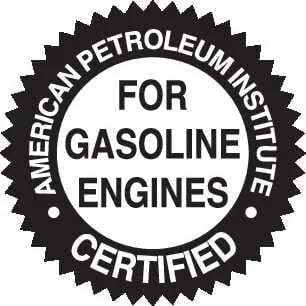
The American Petroleum Institute (API) Certification Mark identifies engine oils that satisfy the stringent quality standards set by the International Lubricant Specification Advisory Committee (ILSAC). To ensure the health of your powertrain, you should exclusively use engine oils that feature this official API Certification Mark. |

 Vehicle Identification Number (VIN)
Your Vehicle Identification Number (VIN) is the unique fingerprint of your Kia Telluride. It is required for all official vehicle registration processes, insurance documentation, and any legal matters related to your ownership of the vehicle...
Other information:
Subaru Forester 2019-2026 Owners Manual: Where to place a child restraint system
The following are SUBARU’s recommendations on where to place a child restraint system in your vehicle. WARNING Several types of child restraint systems may conceal the buckle of the neighboring seat. If the occupant of the neighboring seat cannot correctly fasten the seatbelt, that person must move to a different seat...
Subaru Forester 2019-2026 Owners Manual: Tire pressure monitoring system (TPMS) (U.S.-spec. models)
The tire pressure monitoring system provides the driver with a warning message by sending a signal from a sensor that is installed in each wheel when tire pressure is severely low. The tire pressure monitoring system will activate only when the vehicle is driven...
Categories
- Manuals Home
- Replacing battery of access key fob
- Instrument panel
- Auto Start Stop warning light/Auto Start Stop OFF indicator light (yellow)
- New on site
- Most important about car
Setting the clock manually
