
Subaru Forester: Driving your vehicle / Vehicle load limit
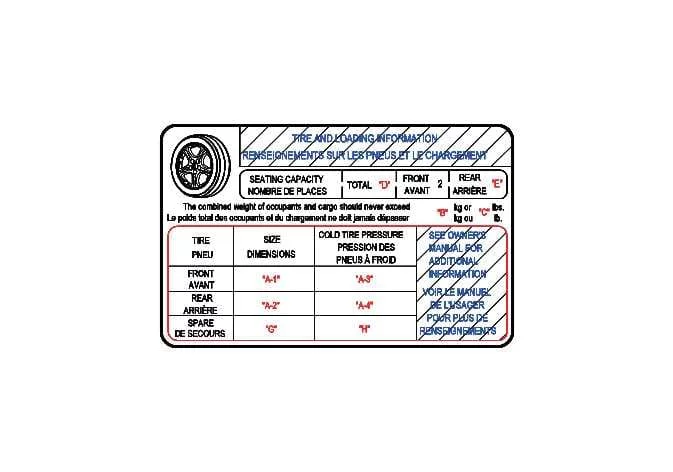
The tire and loading information label on the driver side door provides the load limit information for your Kia Telluride.
Tire and loading information label
The label located on the driver side door sill shows the original tire size, the recommended cold tire inflation pressures, the approved seating capacity, and the vehicle capacity weight for your specific vehicle.
|
Vehicle capacity weight:
-
7 seats: 1,157 lb (525 kg)
-
8 seats: 1,323 lb (600 kg)
Vehicle capacity weight means the maximum combined weight of all occupants and cargo. If the Kia Telluride is towing a trailer, this combined weight also includes the trailer tongue load transferred to the vehicle.
Total seating capacity is 7 or 8 occupants, depending on configuration: 2 people in the front seats and 5 or 6 people in the rear seating positions.
Seating capacity refers to the maximum number of occupants, including the driver, that the vehicle is designed to carry.
The practical seating capacity may be reduced depending on the total weight of the occupants, cargo, and any trailer tongue load being carried or towed.
Do not overload your vehicle. The Kia Telluride has a specific load limit that includes the combined weight of passengers, luggage, cargo, and any applicable towing load.
Towing capacity:
-
Smartstream G2.5 T-GDi:
-
With brake system: 5,000 lbs. (2,268 kg)
-
Without brake system: 1,653 lbs. (750 kg)
-
Towing capacity is the maximum total trailer weight, including the weight of cargo loaded in the trailer, that your vehicle is permitted to tow.
Cargo capacity:
The cargo capacity of your Kia Telluride increases or decreases depending on the number of occupants and their combined weight.
Steps For Determining Correct Load Limit—
-
Locate the statement “The combined weight of occupants and cargo should never exceed XXX kg or XXX lbs.” on your vehicle’s placard.
-
Determine the combined weight of the driver and all passengers who will be riding in the vehicle.
-
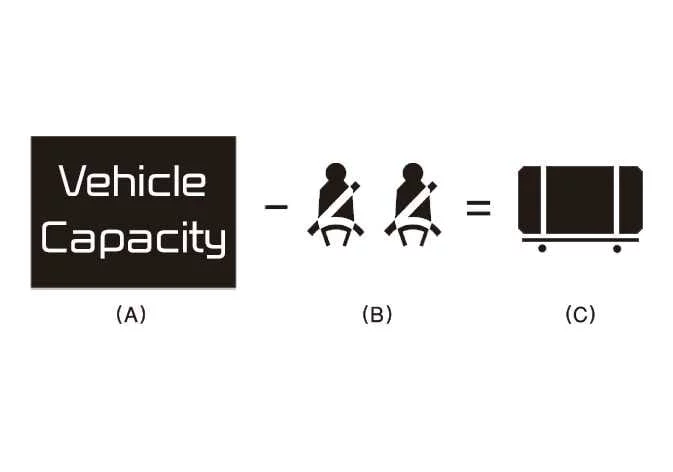
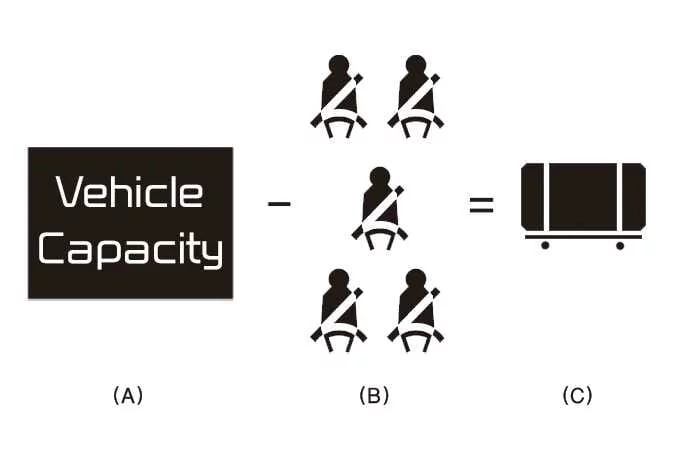
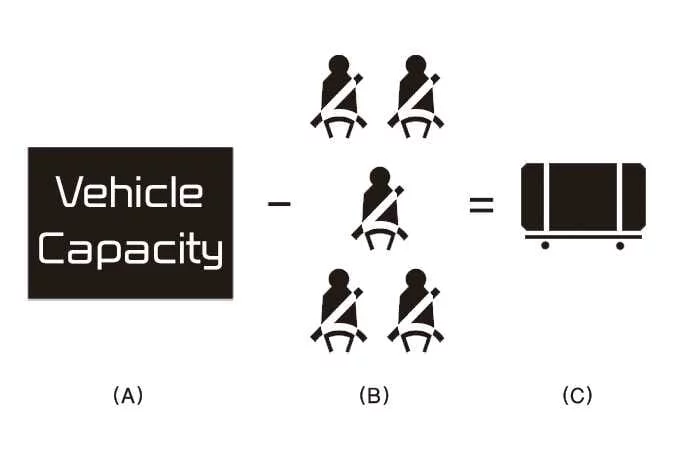
Subtract the combined occupant weight from the stated XXX kg or XXX lbs. vehicle capacity weight.
-
The remaining number is the available cargo and luggage load capacity. For example, if the “XXX” amount is 1400 lbs. and five passengers weighing 150 lb each will ride in the vehicle, the available cargo and luggage load capacity is 650 lbs. (1400 - 750 (5 × 150) = 650 lbs.).
-
Determine the combined weight of all luggage and cargo being loaded into the vehicle. This weight must not exceed the available cargo and luggage capacity calculated in Step 4.
-
If your Kia Telluride will tow a trailer, part of the trailer load will be transferred to the vehicle as tongue weight. Refer to this manual to determine how that tongue load reduces the available cargo and luggage capacity.
WARNING
Loose cargo
Do not drive with unsecured heavy or blunt objects in the passenger compartment, such as suitcases, tools, or unsecured child restraints. During a sudden stop or collision, these items may move violently and strike occupants.
|
|
Item |
Description |
Total |
|---|---|---|
|
(A) |
Vehicle Capacity Weight |
849 lb (385 kg) |
|
(B) |
Subtract Occupant Weight 150 lb (68 kg)×2 |
300 lb (136 kg) |
|
(C) |
Available Cargo and Luggage Weight |
549 lb (249 kg) |
|
|
Item |
Description |
Total |
|---|---|---|
|
(A) |
Vehicle Capacity Weight |
849 lb (385 kg) |
|
(B) |
Subtract Occupant Weight 150 lb (68 kg)×5 |
750 lb (340 kg) |
|
(C) |
Available Cargo and Luggage Weight |
99 lb (45 kg) |
|
|
Item |
Description |
Total |
|---|---|---|
|
(A) |
Vehicle Capacity Weight |
849 lb (385 kg) |
|
(B) |
Subtract Occupant Weight 161 lb (73 kg)×5 |
805 lb (365 kg) |
|
(C) |
Available Cargo and Luggage Weight |
44 lb (20 kg) |
Refer to the tire and loading information label on your Kia Telluride for the exact capacity weight and seating information for your vehicle. The combined weight of the driver, passengers, cargo, and any applicable trailer tongue load must never exceed the vehicle capacity weight.
Certification label
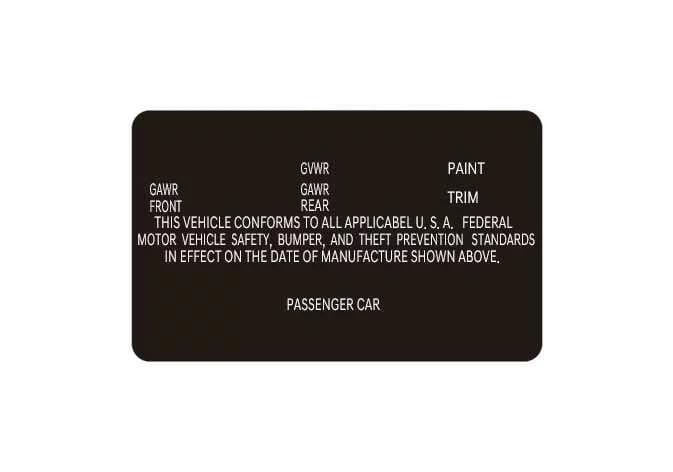
The certification label for the Kia Telluride is located on the driver side door sill at the center pillar.
|
This label identifies the maximum permitted weight of the Kia Telluride when it is fully loaded. This value is known as the GVWR, or Gross Vehicle Weight Rating, and it includes the weight of the vehicle itself, all passengers, and all cargo.
The certification label also lists the maximum weight that may be carried by the front and rear axles. This rating is called the GAWR, or Gross Axle Weight Rating.
To determine the actual load on the front and rear axles, take your vehicle to a weigh station and have it weighed. An authorized Kia dealer can help you understand these ratings and loading requirements. Always distribute cargo evenly from side to side across the vehicle center line.
WARNING
Overloading
Never exceed the GVWR, the GAWR for the front or rear axle, or the vehicle capacity weight specified for your Kia Telluride. Exceeding these limits can negatively affect steering, braking, stability, and overall vehicle control.
The certification label helps determine how much cargo, equipment, and installed accessories your vehicle can safely carry.
Any items carried inside the passenger compartment, such as luggage, tools, boxes, or packages, move at the same speed as the vehicle. During sudden braking, sharp turning, or a collision, unsecured items can continue moving and may strike occupants, causing injury.
WARNING
Overloading
Do not overload your Kia Telluride. Excessive weight can increase tire heat buildup, raise the risk of tire failure, lengthen stopping distances, and reduce handling performance, all of which may contribute to a crash.
NOTE
Do not overload your vehicle. Damage caused by overloading the Kia Telluride may not be covered by the vehicle warranty.
 If you decide to tow a trailer
Before towing a trailer with your Kia Telluride, keep the following ..
 Vehicle weight
This section explains how to load your Kia Telluride correctly so the total loaded vehicle weight remains within its approved design limits. Proper loading helps preserve handling, braking, durability, and overall vehicle performance...
Other information:
Subaru Forester 2019-2026 Owners Manual: Refueling
Only one person should be involved in refueling. Do not allow others to approach the area of the vehicle near the fuel filler pipe while refueling is in progress. Be sure to observe any other precautions that are posted at the service station. To unlock the fuel filler lid, perform one of the operations below...
Kia Telluride (LQ2, 2027-2026) Owner's Manual: California perchlorate notice
Perchlorate Material—special handling and containment measures may apply. For further details and regulatory compliance guidelines, please visit the official website at https://dtsc.ca.gov/perchlorate. Notice to California Vehicle Dismantlers: Perchlorate-containing automotive components and materials—such as safety air bag inflators, seatbelt pre-tensioner assemblies, and keyless remote entry key fob batteries—must be handled, removed, and disposed of strictly in accordance with Title 22 of the California Code of Regulations, Section 67384...
Categories
- Manuals Home
- Reclining the seatback (if equipped)
- Changing a flat tire
- Auto Start Stop warning light/Auto Start Stop OFF indicator light (yellow)
- New on site
- Most important about car
Type B multi-function display (color LCD)
Turn the ignition switch to “ON”.
 button.
Select “Settings”.
Select “Vehicle”.
Select “Time/Date” and then select “Manual”.
button.
Select “Settings”.
Select “Vehicle”.
Select “Time/Date” and then select “Manual”.
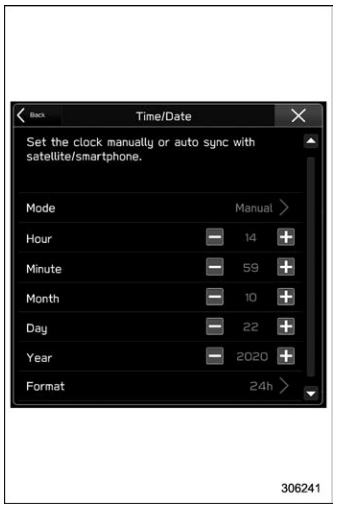
 to complete the
clock
setting.
to complete the
clock
setting.
