
Subaru Forester: Tire Pressure Monitoring System (TPMS) / Low tire pressure indicator light
When the TPMS warning indicators illuminate on the dashboard of your Kia Telluride, it signals that one or more of your tires have experienced a significant drop in air pressure and are dangerously under-inflated.
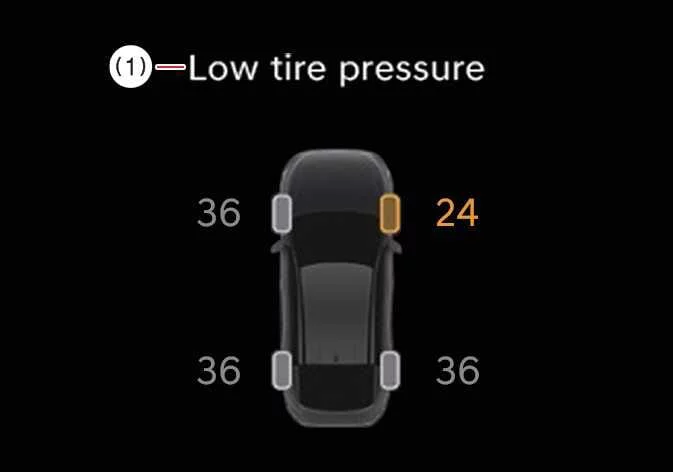
|
|
If the low pressure indicator light turns on while driving, ease off the accelerator immediately, avoid sharp or aggressive steering maneuvers, and prepare for extended braking distances. Safely pull over to a secure roadside location and inspect all four tires as soon as possible.
Re-inflate the affected tire or tires to the recommended cold inflation pressure specified on the vehicle placard located on the outer panel of the driver's side center pillar (B-pillar). If you cannot safely reach a service station or if the damaged tire fails to hold air pressure after inflation, carefully replace the under-inflated wheel with the spare tire stored on your Kia Telluride.
The TPMS malfunction and low tire pressure warning light may remain illuminated for a short period after restarting the vehicle. Typically, it requires up to 20 minutes of continuous driving above minimum speed thresholds for the sensor system to re-evaluate pressure levels, clear the alert, and complete its diagnostic cycle after the tire has been properly serviced or inflated.
During cold weather or winter transitions, the low tire pressure light may trigger unexpectedly if you last calibrated your tires during warm ambient conditions. This behavior is normal and does not indicate a system fault; ambient temperature drops cause air within the tire casing to contract, leading to a proportional decline in measured internal pressure.
Regularly inspect tire pressures and adjust them to match recommended specification values under the following driving conditions:
-
You are traveling from a warm geographic climate or heated garage into a significantly colder environment.
-
You are driving from a cold region into a warmer climate zone where elevated thermal expansion can alter baseline pressure.
-
Seasonal weather transitions produce extremely high or low ambient outdoor temperatures.
Adding air to an under-inflated tire may not immediately extinguish the instrument cluster warning light if the gauge or inflator tool used has a marginal calibration tolerance. To ensure the Kia Telluride TPMS resets properly and turns off the warning light, inflate the tire slightly above the recommended baseline specification before verifying cold pressures.
WARNING
Low pressure damage
Never continue driving your Kia Telluride on severely under-inflated or flat tires. Operating under low pressure generates intense internal heat buildup, causing rapid sidewall degradation and structural failure that drastically impairs vehicle handling stability, lengthens stopping distances, and increases the risk of losing vehicle control.

 TPMS malfunction indicator
If an electronic or hardware fault develops within the monitoring network, the low tire pressure warning icon ( ) will flash continuously for approximately 1 minute before remaining steadily illuminated on the instrument display...
Other information:
Kia Telluride (LQ2, 2027-2026) Owner's Manual: Trailer brakes
If your trailer is equipped with its own braking system, verify that it complies with all applicable state or local regulations and that it has been installed correctly and is operating properly before towing. If the trailer exceeds the maximum allowable trailer weight for towing without trailer brakes, it must be equipped with an adequate braking system...
Subaru Forester 2019-2026 Owners Manual: Operating conditions
The Reverse Automatic Braking (RAB) system will operate when all of the following conditions are met. EyeSight warning indicator RAB warning indicator RAB OFF indicator The ignition switch is in the “ON” position. The EyeSight warning indicator is off...
Categories
- Manuals Home
- All-Wheel Drive warning light
- Reclining the seatback (if equipped)
- Disabling functions
- New on site
- Most important about car
Average vehicle speed
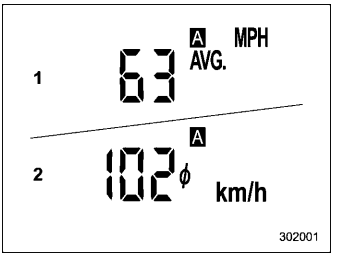
This display shows the average vehicle speed since the trip meter was last reset. Pressing the TRIP RESET switch toggles the display between the average vehicle speed corresponding to the A trip meter display and the average vehicle speed corresponding to the B trip meter display. When either of the trip meter displays is reset, the corresponding average vehicle speed value is also reset.
