
Subaru Forester 2019-2026 Owners Manual / Seat, seatbelt and SRS airbags / Child restraint systems / To hook the top tether
Subaru Forester: Child restraint systems / To hook the top tether
CAUTION
- Remove the head restraint when mounting a child restraint system. Otherwise, the top tether cannot be fastened tightly.
- Store the head restraint that has been removed in the cargo area. Avoid placing the head restraint in the passenger compartment, as it could be thrown around in the passenger compartment in a sudden stop or a sharp turn.
- Remove the head restraint where the child restraint system is to be installed. For details, refer to “Head restraints”.
- For models with a reclining rear seat,
adjust the seatback to the upright position.
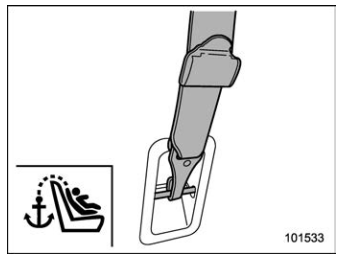
- Attach the top tether hook to the appropriate upper anchorage.
- Tighten the top tether securely.
Contact your SUBARU dealer if you have any questions regarding the installation of a child restraint system.
WARNING
- Do not use a seatbelt extender. If a seatbelt extender is used when installing a child restraint system, the seatbelt will not securely hold the child restraint system. Use of a seatbelt extender could cause death or serious injury to children or other passengers in sudden braking, swerving, or accidents.
- Attach the child restraint system to the anchors properly. When using the LATCH anchors, be sure that there are no foreign objects around the anchors. Make sure the child restraint system is securely attached. Otherwise it may cause death or serious injury to children or other passengers in sudden braking, swerving, or accidents.
 Top tether anchorages. Anchorage location
This vehicle is equipped with three top
tether anchorages so that a child restraint
system having a top tether can be installed
in the rear seat. When installing such a
child restraint system, proceed as follows,
while observing the instructions from the
child restraint system manufacturer.
Si..
 SRS airbag (Supplemental Restraint System airbag)
Supplemental Restraint System (SRS)
name is used because the airbag system
supplements the vehicle’s seatbelts.
This vehicle is equipped with a supplemental
restraint system which consists of
seven airbags...
Other information:
Kia Telluride (LQ2, 2027-2026) Owner's Manual: When flatbed is unavailable
A two-wheel drive (2WD) Kia Telluride may be towed with its non-driven wheels rolling on the roadway (without wheel dollies), provided the driven wheels are fully raised off the ground and the electronic parking brake is disengaged prior to switching off the vehicle...
Kia Telluride (LQ2, 2027-2026) Owner's Manual: In case of an emergency while driving
In the event of an unexpected roadside emergency, maintain your composure, keep a firm grip on the steering wheel, and strictly carry out these recommended procedures: If the vehicle stalls while driving Smoothly ease off the accelerator pedal and allow speed to decay gradually while holding a straight path in your lane...
Categories
- Manuals Home
- Steering Responsive Headlight (SRH)
- RAB warning light (if equipped)
- Instrument panel
- New on site
- Most important about car
Average fuel consumption
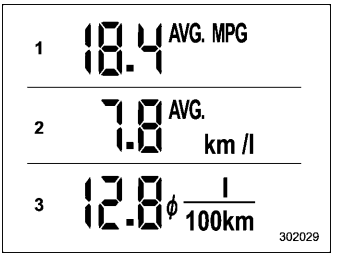
This display shows the average rate of fuel consumption since the trip meter was last reset.

Copyright © 2026 www.suforester5.com